
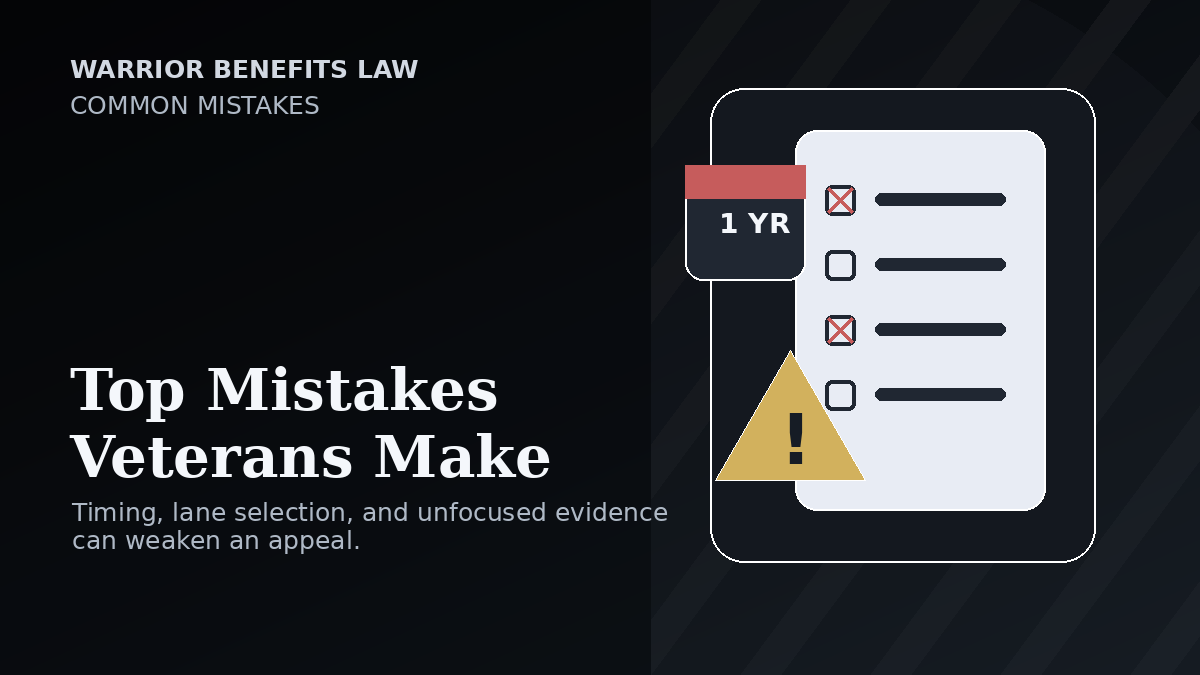
Veterans often make understandable mistakes after a denial because the system is confusing and the next move feels urgent. The problem is that a rushed appeal can add time without solving the core issue.
1. Missing the one-year review window
Many veterans set the decision letter aside while they recover, work, or try to gather documents. By the time they revisit the case, they may have lost easier review options and complicated the effective-date picture.
2. Picking an appeal lane before identifying the problem
A Higher-Level Review is not a fix for missing evidence. A Supplemental Claim is not always the best move when the VA simply made a legal or factual error. Strategy comes first.
3. Sending too much instead of sending the right evidence
Not all evidence helps. Sometimes the record grows larger without becoming stronger. Veterans are usually better served by targeted evidence that addresses the specific reason for the denial.
4. Ignoring examination problems
If a denial relies on a weak examination or an unsupported opinion, that issue should be addressed directly. Many cases are lost because the exam’s flaws are treated as fixed facts instead of challengeable issues.
5. Waiting too long to get help
Some veterans wait until after multiple review cycles before asking for guidance. Earlier strategy can improve lane selection, preserve timing, and avoid avoidable delay.
6. Assuming a hearing is always better
Hearings can be powerful when testimony matters. But they also increase time and are not necessary in every case. A clean written record may be the stronger path in some appeals.
What veterans should do instead
Read the decision. Identify the missing piece. Choose the right lane. Build focused evidence. Then move the case forward with discipline instead of frustration.